Rome landmarks
Photo: BOB H · CC BY-SA 4.0

Landmarks

Rome's Most Iconic Landmarks

A deep, editorial guide to Rome's most iconic landmarks, the Colosseum, Roman Forum, Pantheon, St. Peter's, Trevi Fountain, and more, with history and visiting tips.

Rome wears its history in stone, and its landmarks span nearly three thousand years, from the blood-soaked arena of the Colosseum and the ruined heart of the ancient Forum to the perfect dome of the Pantheon, the baroque theater of the Trevi Fountain, and the towering majesty of St.

Peter's. Few cities on earth pack so many world-defining monuments into so walkable a center, where a two-thousand-year-old temple shares a piazza with a gelato counter and an emperor's mausoleum guards the river.

This guide profiles Rome's most iconic landmarks in depth, what they are, when they were built, why they matter, and how to visit them well.

These are the monuments that shaped Western architecture, faith, and imagination, and understanding their stories transforms a checklist of sights into a journey through the layers of the Eternal City.

For most, timed tickets and a little planning are essential; for all, arriving early or late rewards you with softer light and thinner crowds.

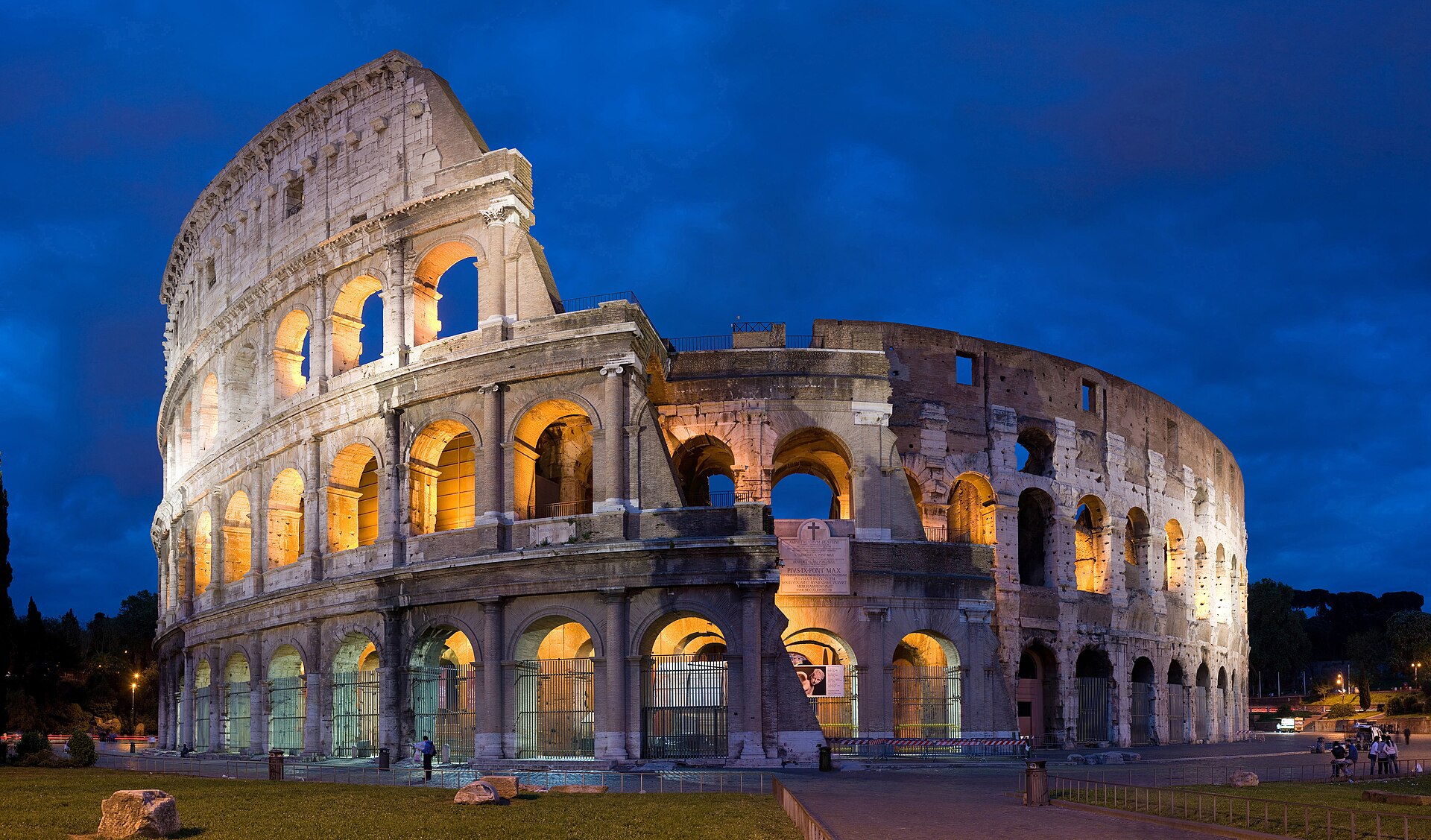
Amphitheater · Celio / Monti · 80 AD

Colosseum

The largest amphitheater ever built and the enduring symbol of Rome.

Completed under the Flavian emperors in 80 AD, the Colosseum could hold up to 50,000 spectators for gladiatorial combat, staged hunts, and public spectacles, its ingenious system of vaults, lifts, and trapdoors delivering wild animals and fighters into the arena.

Built of travertine, tuff, and brick-faced concrete, it remains a masterpiece of Roman engineering and the model for stadiums ever since. Though earthquakes and centuries of stone-robbing stripped it, its scarred grandeur is undiminished.

Today you can walk the reconstructed arena floor, descend into the underground hypogeum, and climb the tiers for views over the Forum.

Visiting

Open daily with a timed ticket shared with the Roman Forum and Palatine Hill (valid 24 hours). Book online well ahead; arena-floor and underground access cost a little more and require advance reservation.

Insider tip: Go at opening or in the last hour of light to dodge crowds and catch the travertine glowing gold. The nearby Oppian Hill offers a fine free view from above.

📍 View on Google Maps →

Ancient ruins · Centro Storico · 7th c. BC onward

Roman Forum & Palatine Hill

The civic, political, and religious heart of the ancient world.

For over a millennium, the Roman Forum was the center of Roman public life, a dense stage of temples, basilicas, arches, and markets where senators debated, triumphs paraded, and emperors were deified.

Wandering the Via Sacra past the Arch of Titus, the Temple of Saturn, and the House of the Vestals is to walk the spine of an empire.

Rising above it, the Palatine Hill, mythical birthplace of Rome and later the address of imperial palaces, gives the English word 'palace' its name and offers sweeping views over both the Forum and the Circus Maximus.

Visiting

Covered by the Colosseum combined ticket. The site is large, uneven, and largely unshaded, allow two to three hours and wear sturdy shoes.

Insider tip: Bring water and a hat, and consider a guide or audio guide, the ruins mean far more with their stories. Late afternoon light is magical over the stones.

📍 View on Google Maps →

Ancient temple / church · Centro Storico · 126 AD

The Pantheon

The best-preserved monument of ancient Rome, crowned by the world's largest unreinforced concrete dome.

Rebuilt by Hadrian around 126 AD on the site of an earlier temple, the Pantheon has stood, roof intact, for nearly nineteen centuries, a feat unmatched in the ancient world.

Its coffered concrete dome, a perfect hemisphere whose diameter equals its height, is pierced by the oculus, a nine-meter opening that floods the interior with a moving shaft of light (and the occasional rain).

Converted to a church in the 7th century, which spared it destruction, it now holds the tombs of the painter Raphael and Italy's kings. Its proportions have inspired architects from the Renaissance to the present day.

Visiting

Now requires an inexpensive timed ticket. Open daily; it still functions as a church, so dress and behave respectfully. The piazza and portico outside are free to admire.

Insider tip: Visit around midday to see the strongest sun disc move across the interior, or in a light rain to watch water fall through the oculus, an unforgettable sight.

📍 View on Google Maps →

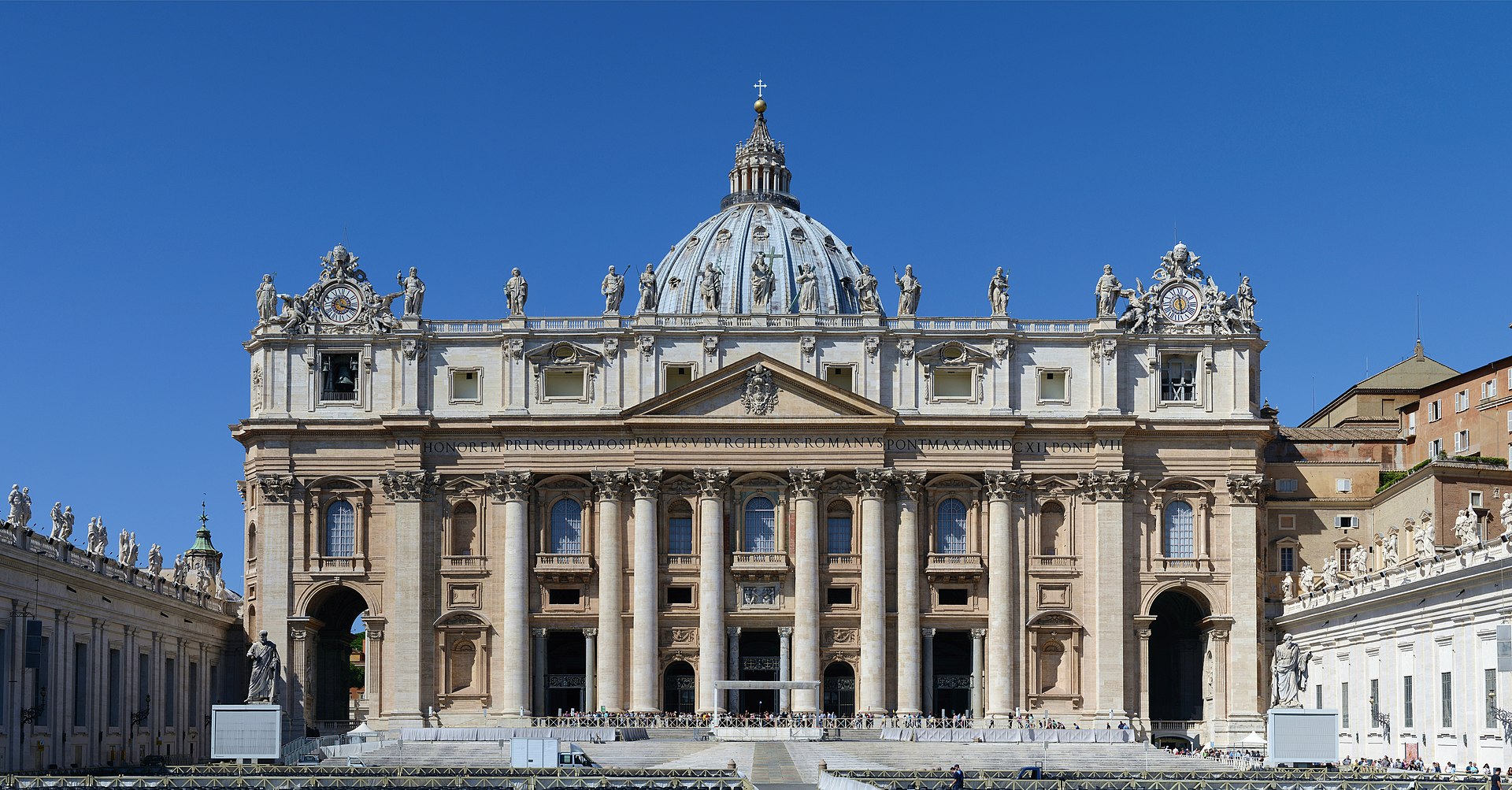
Basilica · Vatican City · 1626

St. Peter's Basilica

The largest church in the world and the spiritual heart of Catholicism.

Built over the traditional tomb of St. Peter across more than a century, St. Peter's is the crowning achievement of Renaissance and baroque Rome, shaped by the genius of Bramante, Michelangelo, Maderno, and Bernini.

Michelangelo's vast dome soars 136 meters, Bernini's bronze baldachin canopies the papal altar, and his sweeping colonnaded piazza embraces pilgrims like welcoming arms. Inside, Michelangelo's tender 'Pietà' and a wealth of marble, mosaic, and gilt overwhelm the senses.

It remains the ceremonial center of the papacy and one of the most visited sacred sites on earth.

Visiting

Entry to the basilica is free (expect a security queue and a strict modest dress code). A ticket lets you climb the cupola; the Vatican Museums and Sistine Chapel are a separate, ticketed visit nearby.

Insider tip: Arrive early or near closing to beat the lines and crowds. Climb the dome for one of Rome's best panoramas over the Vatican and the city.

📍 View on Google Maps →

Museum / chapel · Vatican City · 1481–1512

Vatican Museums & Sistine Chapel

Five centuries of papal art, culminating in Michelangelo's Sistine ceiling.

Amassed by popes over five hundred years, the Vatican Museums hold one of the greatest art collections in existence, classical sculpture like the Laocoön and the Apollo Belvedere, the map-lined galleries, and Raphael's frescoed Rooms, all building toward the overwhelming climax of the Sistine Chapel.

There, Michelangelo's ceiling (1508–1512) and his later 'Last Judgment' represent one of the supreme achievements of Western art, thronged daily by hushed crowds craning upward. The scale is immense and the crowds intense, but the artistic payoff is unmatched.

Visiting

Ticketed and timed; book well ahead. Early-entry or evening slots (seasonal) ease the crush. No photography is allowed in the Sistine Chapel, and modest dress is required throughout.

Insider tip: Go at opening or opt for a special-access tour; the midday crowds through the galleries can be exhausting. Save energy for the Raphael Rooms just before the chapel.

📍 View on Google Maps →

Baroque fountain · Trevi · 1762

Trevi Fountain

Rome's most theatrical fountain, and its most beloved coin-toss tradition.

Completed in 1762 to a design by Nicola Salvi, the Trevi is the grandest of Rome's baroque fountains, a rushing cascade where the sea-god Oceanus rides a shell chariot drawn by tritons and sea horses against the facade of the Palazzo Poli.

It marks the terminus of the ancient Aqua Virgo aqueduct, which still feeds it. Tradition holds that a coin tossed over the left shoulder ensures a return to Rome; thousands of euros a day are collected and donated to charity.

Immortalized in film and endlessly photographed, it is pure Roman spectacle.

Visiting

Free and always open, in a compact piazza that grows very crowded by day. There's no charge, only the optional coin.

Insider tip: Come at dawn or late at night to actually hear the water and photograph the marble without the crush. Toss your coin over your left shoulder with your right hand.

📍 View on Google Maps →

Mausoleum / fortress · Borgo · 139 AD

Castel Sant'Angelo

Hadrian's mausoleum turned papal fortress, crowned by an archangel.

Begun by Emperor Hadrian as a monumental cylindrical tomb and completed in 139 AD, this riverside landmark was later converted into a fortress, a papal residence and refuge, and a prison, its history spiraling upward through nearly two millennia.

Popes could flee here from the Vatican along the elevated 'Passetto' corridor during sieges.

Inside are frescoed Renaissance apartments, dungeons, and an armory; the rooftop terrace, crowned by a bronze statue of the Archangel Michael sheathing his sword, offers a superb panorama over the Tiber and St. Peter's. Bernini's angel-lined bridge leads to its door.

Visiting

Ticketed and open daily (closed some Mondays). The spiral ramp and staircases lead up through the layered history to the terrace.

Insider tip: Visit late afternoon for golden light on the terrace and the dome, then photograph the angel bridge at blue hour from Ponte Umberto I.

📍 View on Google Maps →

Monumental stairway · Campo Marzio · 1725

The Spanish Steps

A sweeping baroque stairway and one of Rome's great meeting places.

Completed in 1725, the Scalinata di Trinità dei Monti climbs in 135 elegant, curving steps from Piazza di Spagna to the twin-towered church of Trinità dei Monti above, a masterpiece of baroque urban theater.

At the base sits Bernini's 'Barcaccia' fountain, shaped like a half-sunken boat, and the surrounding streets, Via dei Condotti chief among them, hold Rome's most famous luxury boutiques. In spring, cascades of azaleas transform the steps into a floral spectacle.

Long a haunt of poets (Keats died in a house beside them), it remains a quintessential Roman gathering spot.

Visiting

Free and open, in the heart of the shopping district. Note that sitting on the steps is prohibited and fined, admire them standing or from the terrace.

Insider tip: Come at sunrise for the emptiest, softest-lit shot, and time an April visit for the blooming azaleas. Climb to the top for a fine view over the rooftops.

📍 View on Google Maps →

Baroque square · Centro Storico · 1651

Piazza Navona

Rome's most elegant square, built over an ancient stadium.

Piazza Navona traces the exact oval footprint of the Stadium of Domitian (1st century AD), where Romans once watched athletic games, its long, curved shape a fossil of the ancient racetrack.

Reborn in the baroque age, it centers on Bernini's magnificent Fountain of the Four Rivers (1651), whose muscular figures personify the Nile, Ganges, Danube, and Río de la Plata beneath an Egyptian obelisk, framed by Borromini's church of Sant'Agnese in Agone.

Two further fountains and a ring of cafés complete Rome's grandest open-air salon, alive with artists, musicians, and crowds day and night.

Visiting

Free and always open. Cafés on the square are pricey; a coffee buys you a front-row seat to the spectacle.

Insider tip: Visit at blue hour when the fountains are lit and the day-trippers thin. In December, a lively Christmas market fills the square.

📍 View on Google Maps →

Roman baths · Aventino · 216 AD

Baths of Caracalla

Colossal, hauntingly preserved ruins of an imperial bathing complex.

Completed around 216 AD under Emperor Caracalla, these vast public baths could serve some 1,600 bathers at once amid soaring vaulted halls, hot and cold pools, gyms, libraries, and gardens, a temple to Roman leisure and engineering.

Though the marble and mosaics were long ago stripped, the surviving brick walls still rise up to 30 meters, conveying the staggering scale better than almost any other ruin in the city.

Rarely crowded, the site is serene and atmospheric, and on summer nights it becomes a spectacular open-air stage for opera and ballet.

Visiting

Ticketed and open daily (closed some Mondays). Allow an hour or two; an optional virtual-reality visit reconstructs the vanished decoration.

Insider tip: Come for the summer opera season to see the ruins floodlit and alive, or visit by day for a peaceful, uncrowded wander among the giant walls.

📍 View on Google Maps →

Papal basilica · Esquilino · 432 AD

Basilica di Santa Maria Maggiore

The grandest of Rome's Marian basilicas, layered with 1,500 years of art.

Founded in the 5th century, Santa Maria Maggiore is the largest and best-preserved of Rome's four papal basilicas dedicated to the Virgin Mary, and a dazzling anthology of Roman art across the ages.

Its nave glitters with 5th-century mosaics; the gilded coffered ceiling is said to use gold first brought from the Americas; the Cosmatesque marble floor gleams underfoot; and baroque chapels flank the aisles.

A working, deeply venerated church far from the tourist scrum, it rewards visitors with grandeur and calm just steps from Termini station.

Visiting

Entry to the basilica is free (modest dress required). Small tickets cover the loggia mosaics and the archaeological area beneath.

Insider tip: It's blessedly uncrowded compared to the headline sights, an ideal, awe-inspiring stop between the center and Termini. Look up to take in the ancient mosaics and the golden ceiling.

📍 View on Google Maps →

Frequently Asked Questions

What are the best landmarks to see in Rome?

Prioritize the Colosseum and Roman Forum, the Pantheon, St. Peter's Basilica and the Vatican Museums, the Trevi Fountain, and Piazza Navona. With more time, add Castel Sant'Angelo, the Baths of Caracalla, and Santa Maria Maggiore.

How many days do you need to see Rome's landmarks?

Three to four days covers the essentials, ancient Rome (Colosseum, Forum, Pantheon), the Vatican, and the baroque center (Trevi, Navona, Spanish Steps). A fifth day allows the Appian Way, the Borghese, and quieter landmarks.

Do I need tickets for Rome's landmarks?

Yes for many: timed tickets for the Colosseum (with the Forum and Palatine), the Vatican Museums, and now the Pantheon, plus reservations for the Galleria Borghese. St. Peter's Basilica, the Trevi Fountain, and Piazza Navona are free.

What is the oldest landmark in Rome?

The Roman Forum contains structures dating back over 2,700 years, and the Pantheon (rebuilt around 126 AD) is the best-preserved ancient monument. Many ruins predate the Colosseum (80 AD), which is itself among the world's most famous ancient landmarks.

Which Rome landmarks are free to visit?

St. Peter's Basilica, the Trevi Fountain, the Spanish Steps, Piazza Navona, the Pantheon's exterior, and papal basilicas like Santa Maria Maggiore are free. Many state sites are also free on the first Sunday of the month.

What's the best way to avoid crowds at Rome's landmarks?

Visit at opening or in the late afternoon, book timed tickets in advance, and consider early-access or evening tours for the Colosseum and Vatican. Free-first-Sunday days are crowded, plan accordingly.