Rio de Janeiro landmarks
Photo: Lima Andruška from Rio de Janeiro, Brazil · CC BY-SA 2.0

Landmarks

Rio de Janeiro's Most Iconic Landmarks

Explore Rio de Janeiro's most iconic landmarks, from Christ the Redeemer and Sugarloaf Mountain to the Selaron Steps and Museum of Tomorrow, with practical visiting notes for each site.

Rio de Janeiro is a city where mountains meet the sea and where history is written into stone, tile, and steel. Few places on earth pack so many recognizable sights into such a dramatic setting, with granite peaks rising straight out of the Atlantic and neighborhoods curling around beaches and bays. The landmarks here are not just photo stops, they are the threads that hold the story of the city together.

This guide walks through eleven of the most iconic places in Rio, spanning colonial churches, grand civic buildings, sporting cathedrals, and bold modern architecture. Some sit high on hilltops with sweeping views, others hide in the busy streets of the center or the bohemian corners of Lapa and Santa Teresa. Together they trace the arc from imperial Brazil to the contemporary waterfront.

Use it to plan a focused day or a longer, slower exploration. Each entry gives you a sense of what makes the site special, how people typically visit, and a practical tip to make the experience smoother. Always check current opening hours and ticket details directly with each attraction before you go, since these can change with the season.

Monument · Corcovado, Tijuca Forest · 1931

Christ the Redeemer

The open armed icon watching over the city

Standing atop Corcovado mountain within Tijuca National Park, Christ the Redeemer is the image most people picture when they think of Rio. The Art Deco statue was designed with the collaboration of engineer Heitor da Silva Costa and French sculptor Paul Landowski, and its outstretched arms have become a symbol of both the city and Brazil as a whole. It is recognized as one of the New Seven Wonders of the World.

The figure is built from reinforced concrete and clad in a mosaic of soapstone tiles, a material chosen for its durability and soft appearance. From the base of the statue, visitors get a panoramic sweep that takes in Sugarloaf Mountain, Guanabara Bay, the lagoon, and the long curve of the southern beaches. On clear days the view stretches far across the surrounding hills and forest.

The experience is as much about the journey as the summit, with a cog train climbing through dense Atlantic forest to reach the top. The atmosphere near the statue is often reflective, with visitors gathering quietly to take in the scale of the monument and the landscape below.

Visiting

Reached via the Corcovado cog train from Cosme Velho, or by official vans and authorized tours. Buy timed entry tickets in advance and confirm current schedules and access options before your visit.

Insider tip: Go early in the day when skies are often clearer and crowds are thinner, and bring a light layer since it can be breezy at the top.

📍 View on Google Maps →

Natural Landmark · Urca · 1912

Sugarloaf Mountain

A granite peak reached by glass cable car

Sugarloaf Mountain, or Pao de Acucar, rises sharply from a peninsula at the mouth of Guanabara Bay in the Urca neighborhood. Its name is often linked to the shape of refined sugar loaves once traded in colonial times. The cable car system that carries visitors to the summit first opened in the early twentieth century and remains one of the city's signature experiences.

The trip is made in two stages, first to the smaller Morro da Urca and then onward to the main summit. From the top the view opens across the bay, the entrance to the Atlantic, Copacabana, and the mountains crowned by Christ the Redeemer in the distance. The combination of sea, city, and granite makes it one of the most photographed vantage points in Rio.

Beyond the views, the area around Urca is calm and pleasant, with a small bay, a promenade, and rock faces popular with climbers. Many visitors linger to watch the light change over the water as the afternoon turns to evening.

Visiting

Access is by cable car from Praia Vermelha in Urca. Confirm current operating hours and ticket prices with the operator, and consider timing your visit for sunset views.

Insider tip: Arrive with time to spare so you can enjoy both the lower Morro da Urca stop and the upper summit without rushing between cable cars.

📍 View on Google Maps →

Stadium · Maracana · 1950

Maracana Stadium

The temple of Brazilian football

Officially named Estadio Jornalista Mario Filho, the Maracana is Brazil's most storied football stadium and one of the most famous in the world. It was built for the 1950 World Cup and has since hosted historic matches, record crowds, and major ceremonies, becoming a pilgrimage site for football fans from every continent.

Over the decades the stadium has been renovated and modernized, most notably ahead of major international events held in the city. It has staged World Cup finals and Olympic ceremonies, cementing its place in global sporting memory. For many visitors, stepping into the vast bowl of seats is an emotional experience even when no match is underway.

Guided tours typically take fans through areas such as the stands, the field level, and spaces that showcase the stadium's history. On match days the atmosphere is electric, with songs, drums, and color filling the terraces.

Visiting

Located in the Maracana district and reachable by metro. Stadium tours and match tickets are available at different times, so check current schedules and availability before planning your visit.

Insider tip: If you can, attend a live match to feel the full energy of the crowd, and keep valuables secure in the busy pre game rush.

📍 View on Google Maps →

Public Artwork · Between Lapa and Santa Teresa · 1990s

Selaron Steps

A mosaic staircase of tiles from around the world

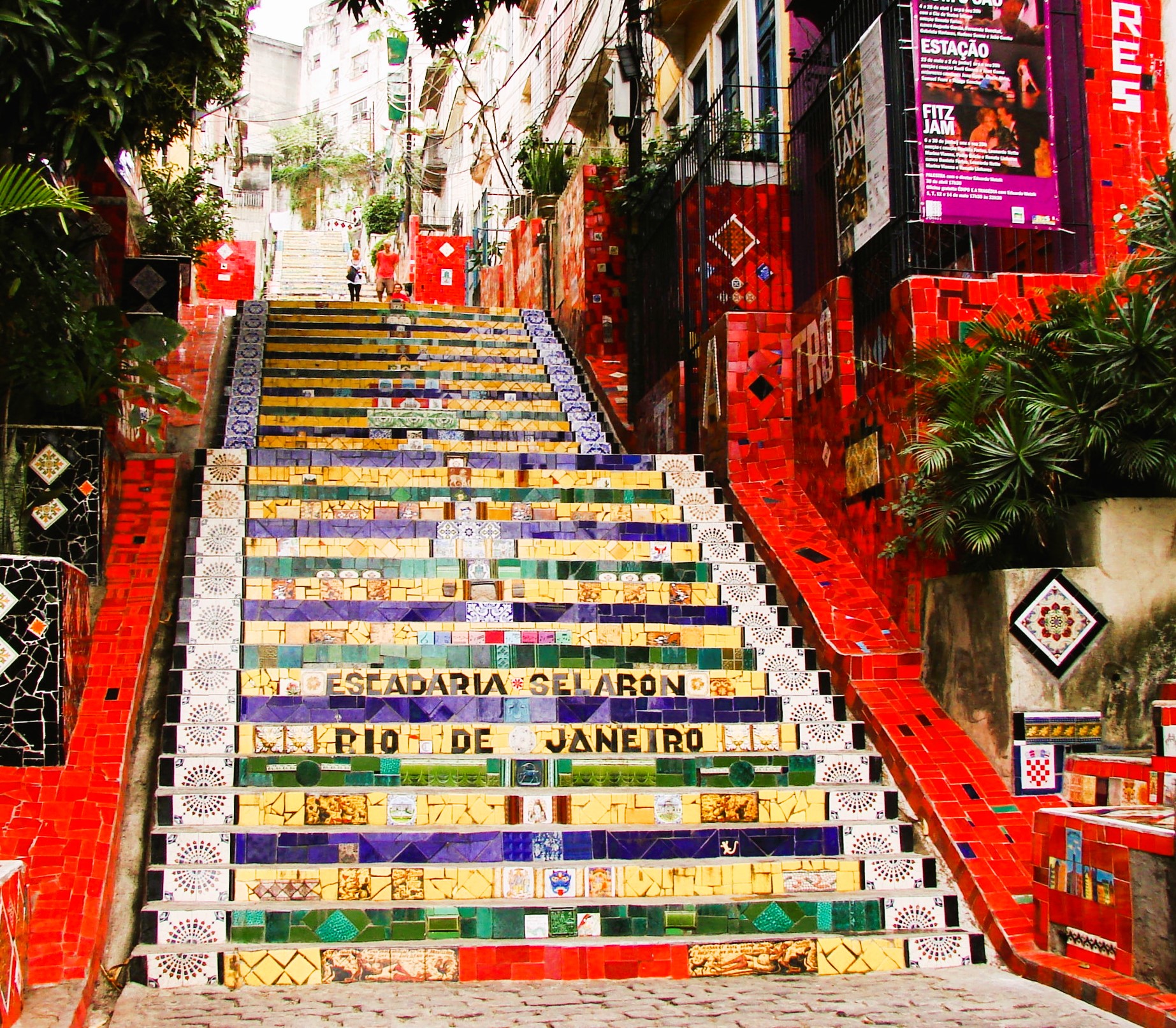
The Escadaria Selaron is a vivid tiled staircase linking the neighborhoods of Lapa and Santa Teresa. It was the lifelong project of Chilean born artist Jorge Selaron, who covered the steps in a patchwork of ceramic tiles, many donated by visitors from countries across the globe. What began as a modest renovation grew into a sprawling, ever changing work of art.

The dominant colors are red, green, and yellow, echoing the Brazilian flag, and the tiles range from painted scenes to fragments of pottery. Each step feels like a small piece of a larger mosaic, and the whole staircase has become a beloved open air artwork that draws a steady stream of visitors and photographers.

Because it sits on a public street, the steps are freely accessible and blend into daily life in the area. The surrounding streets carry the creative, slightly worn charm that defines this part of central Rio.

Visiting

The staircase is on a public street connecting Lapa and Santa Teresa and can be visited on foot. As with any busy urban spot, stay aware of your surroundings and belongings.

Insider tip: Visit earlier in the morning for softer light and fewer crowds, which makes it easier to appreciate the detail in the tiles.

📍 View on Google Maps →

Theatre · Cinelandia, Centro · 1909

Municipal Theatre

A grand stage for opera and ballet

The Theatro Municipal do Rio de Janeiro is one of the country's most important venues for opera, ballet, and classical music. Standing in the Cinelandia area of the city center, its early twentieth century design was influenced by grand European opera houses, giving it an ornate and imposing presence facing a lively public square.

Inside, the theatre is known for its rich decoration, sweeping staircases, and elegant auditorium. It has hosted celebrated performers and productions over its long history and remains a centerpiece of Rio's cultural life. The building itself is considered a landmark of the city's belle epoque ambitions.

Visitors can experience the theatre through performances or, at certain times, guided visits that reveal its interiors and history. The surrounding square, framed by other historic buildings, is a natural gathering point in the heart of the center.

Visiting

Located in Cinelandia and easily reached by metro. Guided tours and performances are offered at various times, so check the theatre's current program and visiting options in advance.

Insider tip: Pair a visit with a walk around Cinelandia square to take in the cluster of historic civic buildings nearby.

📍 View on Google Maps →

Science Museum · Porto Maravilha, Praca Maua · 2015

Museum of Tomorrow

A striking science museum on the revitalized waterfront

The Museu do Amanha, or Museum of Tomorrow, is a science museum designed by architect Santiago Calatrava on the redeveloped port waterfront near Praca Maua. Its dramatic, skeletal roof reaches out over the water, and the building has quickly become a symbol of Rio's contemporary, forward looking side.

The museum explores themes such as sustainability, the environment, and the possible futures of humanity through interactive and immersive exhibits. Rather than displaying traditional collections, it invites visitors to reflect on questions about how societies might live in the years ahead. The setting on the bay reinforces its message about the planet and the future.

The surrounding Porto Maravilha district has been transformed with promenades, public art, and cultural spaces, making the museum part of a larger revitalized area worth exploring on foot.

Visiting

Situated at Praca Maua in the port area, within walking distance of other waterfront attractions. Confirm current opening hours and admission details before visiting.

Insider tip: Combine your visit with a stroll along the Porto Maravilha waterfront, where large scale street art and open plazas add to the experience.

📍 View on Google Maps →

Cathedral · Centro · 1970s

Metropolitan Cathedral

A modernist cone of soaring stained glass

The Metropolitan Cathedral of Saint Sebastian, often called the Catedral Metropolitana, breaks sharply from traditional church design. Built in the city center in the modernist style, its conical form recalls a Mayan pyramid and stands in bold contrast to Rio's older baroque churches. The exterior is deliberately austere and monumental.

Inside, the effect is transformed by four enormous stained glass windows that rise from floor to ceiling, flooding the vast interior with colored light. The open, column free space can hold a large congregation and creates a powerful sense of height and scale. The interplay of concrete and luminous glass is the building's defining feature.

The cathedral serves as an active place of worship as well as a landmark of twentieth century religious architecture. Its central location makes it a convenient stop while exploring the historic core of the city.

Visiting

Located in Centro and within walking distance of other downtown landmarks. Check current visiting hours and any service times before you go, and dress respectfully as it is an active church.

Insider tip: Stand near the center of the interior to fully appreciate the four towering stained glass windows reaching up toward the roof.

📍 View on Google Maps →

Historic Fort · Copacabana · 1914

Copacabana Fort

A seaside fortress at the end of the famous beach

The Forte de Copacabana sits at the southern end of Copacabana beach, on a rocky point with commanding views along the coastline. Built in the early twentieth century for coastal defense, it played a role in notable episodes of Brazilian military history and retains its original heavy fortifications.

Today the fort is open to the public and houses a military museum that tells the story of the site and the wider history it witnessed. The thick walls and gun emplacements give a tangible sense of its defensive purpose, while the position offers some of the best views back along Copacabana and toward the mountains.

Many visitors come as much for the setting as the history, enjoying the sea air and the panorama from the point. The complex includes spaces where people pause to take in the scenery over the water.

Visiting

Found at the southern end of Copacabana beach and reachable on foot along the promenade. Confirm current opening hours and museum admission details before your visit.

Insider tip: Time your visit for the golden hour, when the light along Copacabana and toward the hills is especially beautiful.

📍 View on Google Maps →

Aqueduct · Lapa, Centro · 18th century

Lapa Arches

A colonial aqueduct at the heart of nightlife

The Arcos da Lapa, or Lapa Arches, are the surviving section of the old Carioca Aqueduct built in the colonial era to carry water to the city. Its striking double tier of white arches spans the Lapa district and has become one of the most recognizable structures in central Rio. The scale and rhythm of the arches make it a dramatic urban landmark.

After its original role as an aqueduct ended, the structure was later adapted to carry the Santa Teresa tram, linking the center with the hillside neighborhood above. This blend of colonial engineering and later reuse gives the arches a layered history that spans centuries.

By night, Lapa becomes one of the city's liveliest areas, with music, bars, and crowds gathering beneath and around the arches. The setting captures the mix of history and energy that defines this part of Rio.

Visiting

Located in Lapa, close to the Selaron Steps and central attractions. The arches can be seen from the street at any time, though evenings are especially lively in the surrounding area.

Insider tip: Visit during the day to appreciate the architecture, and return in the evening if you want to experience Lapa's famous nightlife responsibly.

📍 View on Google Maps →

Church · Centro · 18th to 19th century

Candelaria Church

A grand baroque and neoclassical landmark downtown

The Igreja da Candelaria is one of the most important historic churches in the city center, known for its imposing dome and richly decorated interior. Constructed over a long period, it blends baroque and neoclassical elements and reflects the wealth and ambition of Rio during the imperial era. Its facade and dome are prominent features of the downtown skyline.

Inside, the church is finished with fine marble, elaborate detailing, and artworks that reward a slow, careful look. The scale of the nave and the quality of the decoration make it one of the most impressive religious interiors in the center of Rio. It has long been a significant place of worship and civic ceremony.

Standing at a busy junction surrounded by traffic and office buildings, the church offers a calm contrast to the bustle outside. It is an easy addition to a walking route through the historic core.

Visiting

Located in Centro and within walking distance of other downtown landmarks. Check current visiting hours and service times before you go, and dress respectfully inside.

Insider tip: Step inside to admire the marble work and painted details, which are easy to miss if you only view the church from the street.

📍 View on Google Maps →

Historic Building · Praca XV, Centro · 18th century

Paco Imperial

A former royal palace turned cultural center

The Paco Imperial stands on Praca XV in the historic heart of Rio and dates from the colonial period. Originally built as a governors' residence and administrative building, it later served as a seat of royal and imperial power during key moments in Brazilian history. Its solid, restrained colonial architecture reflects its official past.

Over time the building's role shifted, and today it functions as a cultural center hosting exhibitions and events. Walking through its rooms and courtyards, visitors can sense the many layers of history the building has witnessed, from colonial administration to the early days of an independent nation.

Its location on Praca XV places it at the center of old Rio, close to the waterfront and surrounded by other historic sites. The square itself has long been a focal point of city life.

Visiting

Located on Praca XV in Centro, near the waterfront and other historic buildings. Exhibitions and cultural programming vary, so check current opening hours and what is on before your visit.

Insider tip: Explore the wider Praca XV area, which links several historic landmarks within a short and walkable stretch of the old center.

📍 View on Google Maps →

Frequently Asked Questions

How many days do I need to see Rio's main landmarks?

A focused visitor can see the highlights in about three to four days. This allows time for Christ the Redeemer and Sugarloaf Mountain on separate mornings, a day exploring the historic center with its churches and civic buildings, and time for the waterfront and beach area landmarks. Spreading the sights out helps you avoid rushing and gives flexibility if the weather changes.

What is the best way to get around between these landmarks?

Rio has a metro system that conveniently connects the city center, several landmarks, and the southern beach neighborhoods. For hilltop sites like Christ the Redeemer and Sugarloaf Mountain, you use the dedicated cog train and cable car respectively. Many central landmarks are close enough to explore on foot, while ride services and taxis are useful for longer or late connections.

Do I need to book tickets in advance?

For popular sites such as Christ the Redeemer, booking timed entry in advance is strongly recommended, since access can be limited at busy times. Sugarloaf Mountain and stadium tours can also be busier during peak periods. For churches and some public sites there may be no ticket needed, but it is always wise to confirm current requirements before you go.

What is the best time of year to visit Rio?

Rio can be enjoyed year round, though weather varies by season. Clearer skies improve the views from Christ the Redeemer and Sugarloaf Mountain, so many visitors aim for drier, brighter stretches. Major events and holidays can bring larger crowds and higher demand for accommodation, so consider your priorities and check seasonal conditions when planning.

Are these landmarks safe to visit?

The main landmarks are popular and regularly visited, but as in any large city it is important to stay aware of your surroundings. Keep valuables secure and discreet, especially in crowded areas and busy nightlife districts like Lapa. Using official transport for hilltop sites and staying on well traveled routes helps you visit comfortably. Check current local guidance before your trip.

Which landmarks are best for panoramic views?

For sweeping views, Christ the Redeemer and Sugarloaf Mountain are the standouts, each offering a different perspective over the bay, beaches, and mountains. Copacabana Fort provides lovely views along the beach and coastline from sea level. Visiting these on clear days rewards you with some of the most memorable panoramas the city has to offer.