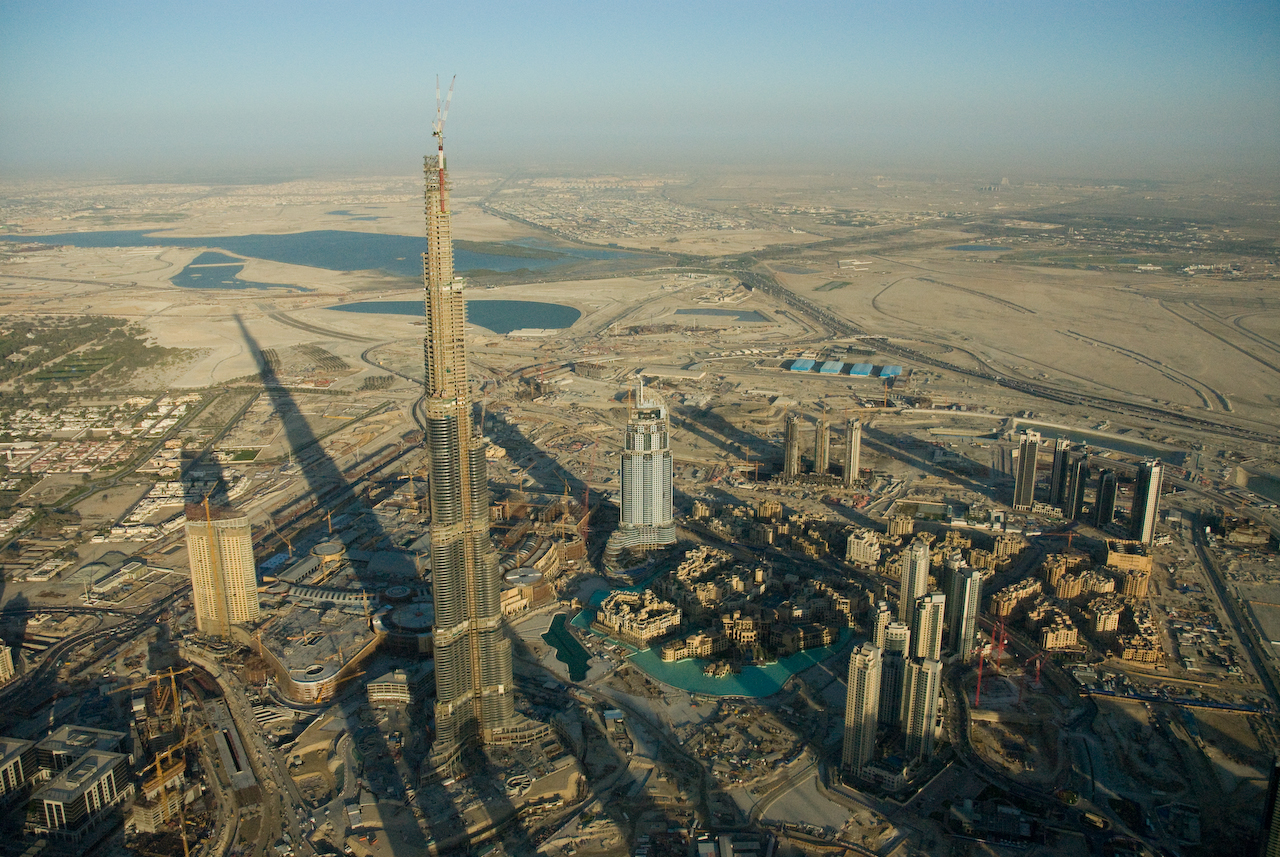
Dubai landmarks
Photo: Robert Bock · CC0

Landmarks

Dubai's Most Iconic Landmarks

Explore Dubai's most iconic landmarks, from the Burj Khalifa and Burj Al Arab to Dubai Creek and the Museum of the Future, with tips on visiting each one.

Dubai wears its ambition openly.

In the space of a few generations it has grown from a modest pearling and trading settlement on a tidal creek into one of the most recognisable cities on the planet, a place where record breaking towers, artificial islands and heritage districts sit within a short drive of one another.

Its landmarks are not just photo backdrops, they are statements of intent, each one telling part of the story of how the emirate sees itself and its future.

What makes Dubai unusual is the range on offer. You can spend the morning wandering the coral and gypsum lanes of Al Fahidi, cross Dubai Creek by traditional abra, and end the day watching the sun set from more than four hundred metres up the Burj Khalifa.

The old and the new are not in competition here, they coexist, and understanding both is the key to understanding the city.

This guide gathers eleven of Dubai's most iconic landmarks, spanning the coastline, the desert edge, the historic core and the glittering business spine of Sheikh Zayed Road.

For each one you will find its neighbourhood, a sense of its character and history, practical notes on visiting, and an insider tip to help you make the most of your time. Use it to build an itinerary that balances the spectacular with the genuinely local.

Skyscraper and observation deck · Downtown Dubai · 2010

Burj Khalifa

The tallest building in the world and the symbol of modern Dubai.

Rising above Downtown Dubai, the Burj Khalifa is the tallest structure and building in the world, and the centrepiece of the whole district.

Its tapering, three lobed form draws on the geometry of a desert flower and on traditional Islamic architecture, and its silvery cladding catches the light differently through the day.

From street level it is genuinely difficult to take in the full scale until you step back across the surrounding boulevards.

The tower is far more than an observation attraction. It houses residences, corporate offices and the Armani Hotel, and it anchors a masterplanned neighbourhood that includes The Dubai Mall and the Dubai Fountain.

For most visitors, though, the draw is the At the Top experience, with observation decks on the upper levels offering sweeping views over the coast, the desert and the endless grid of the city below.

Booking ahead is strongly advised, especially for sunset slots, which are the most popular and often sell out. Tickets are tiered by level, with higher decks commanding higher prices, so decide in advance how high you want to go.

Visiting

Located in Downtown Dubai and directly connected to The Dubai Mall. Access the observation decks via timed tickets, which should be booked online in advance. Check the official website for current opening hours and prices before you go.

Insider tip: Aim for a slot around forty five minutes before sunset so you experience the view in daylight, at golden hour and after dark, all in one visit.

📍 View on Google Maps →

Luxury hotel · Umm Suqeim, Jumeirah · 1999

Burj Al Arab

The sail shaped hotel that became a global emblem of Dubai luxury.

Standing on its own artificial island just off the Jumeirah coast, the Burj Al Arab is shaped like the billowing sail of a traditional dhow, a nod to Dubai's maritime heritage rendered at extraordinary scale.

Since opening it has become shorthand for the city's brand of high luxury, and its silhouette is one of the most photographed in the region.

The interior is famously opulent, with soaring atrium spaces, gold leaf detailing and a level of service pitched at the top of the market.

Access to the hotel is generally reserved for guests and for those with a restaurant, spa or afternoon tea reservation, so a meal or experience booking is the usual way to see inside.

Even without going in, the building rewards a visit. The nearby public beaches and the boardwalk at the adjacent resort offer classic views of the hotel rising above the water, and it is a favourite spot for photographers at both sunrise and sunset.

Visiting

Set on a private island off Jumeirah Beach, near Madinat Jumeirah. Entry to the hotel typically requires a dining or experience reservation. Confirm booking requirements and prices directly with the hotel.

Insider tip: For the best free photograph, head to the public beach beside the Jumeirah Beach Hotel, where the Burj Al Arab lines up beautifully over the sand and sea.

📍 View on Google Maps →

Artificial archipelago · Palm Jumeirah · 2006

Palm Jumeirah

A palm shaped island reclaimed from the sea and visible from space.

Palm Jumeirah is an artificial archipelago built out into the Gulf in the shape of a stylised palm tree, complete with a trunk, fronds and an encircling crescent breakwater.

It is one of the most ambitious land reclamation projects ever completed, and its distinctive outline is recognisable from the air and from satellite imagery.

Today the island is a dense mix of villas, apartment towers, hotels and beach clubs. The trunk carries a monorail running from the mainland out to the crescent, and the fronds are lined with waterfront homes.

Along the crescent sit some of the city's best known resorts, restaurants and leisure venues, making it a destination in its own right.

Visitors come to dine, relax on the beaches, or simply take in the sheer scale of the engineering. The View at The Palm observation deck offers a vantage point over the whole formation, helping you appreciate the shape that is otherwise hard to grasp from ground level.

Visiting

Reached by road and by the Palm Monorail from the Gateway station. Many attractions, beaches and restaurants are open to the public, while resort facilities may be reserved for guests. Check individual venues for hours and prices.

Insider tip: Ride the monorail out to the crescent for an easy, elevated look along the trunk, then visit The View at The Palm to see the full island shape from above.

📍 View on Google Maps →

Architectural landmark and observation deck · Zabeel Park · 2018

Dubai Frame

A giant golden frame linking old Dubai with the new city.

The Dubai Frame is exactly what its name suggests, an enormous rectangular frame standing in Zabeel Park, clad in gold coloured detailing.

It was conceived as a symbolic bridge between the historic quarters of old Dubai on one side and the modern skyline on the other, and it is positioned so that each view frames a different era of the city.

Visitors ride to the top, where a glass floored sky bridge connects the two vertical towers. Standing on the transparent panels is a memorable experience, with the ground far below and panoramic views stretching in both directions across the city.

Looking one way you see the older districts, looking the other you see the towers of the new Dubai.

The lower levels include exhibition spaces that trace the emirate's past and imagine its future, giving context to the views above. It is a compact attraction that packs a strong sense of the city's before and after into a single visit.

Visiting

Located in Zabeel Park with its own entrance and ticketing. Access the sky bridge and galleries via a paid ticket. Check the official channels for current opening hours and admission prices.

Insider tip: Go in the late afternoon so you can look toward the modern skyline as the towers begin to light up against the fading sky.

📍 View on Google Maps →

Museum · Sheikh Zayed Road, Trade Centre · 2022

Museum of the Future

A torus shaped museum exploring what tomorrow could look like.

The Museum of the Future is one of Dubai's boldest recent additions, a gleaming torus shaped building whose curved facade is covered in flowing Arabic calligraphy.

The script is not merely decorative, the windows are formed by the letters themselves, so the architecture and the message are inseparable. It sits prominently beside Sheikh Zayed Road, impossible to miss as you pass.

Inside, the museum is organised as a series of immersive, themed environments rather than traditional galleries. Exhibitions explore space, ecology, wellbeing and emerging technology, using interactive installations to invite visitors to imagine possible futures.

The experience is designed to be experiential and forward looking rather than a conventional display of objects.

Because of its popularity and timed entry system, advance booking is essential, and slots can sell out well ahead. It has quickly become one of the most talked about cultural destinations in the city.

Visiting

Situated on Sheikh Zayed Road near the Emirates Towers metro station. Entry is by timed ticket, which should be booked online in advance. Refer to the official website for up to date hours and ticket prices.

Insider tip: Book your tickets several days ahead if you can, as popular time slots for the Museum of the Future frequently sell out.

📍 View on Google Maps →

Mosque and cultural site · Jumeirah · 1979

Jumeirah Mosque

A graceful mosque that opens its doors to visitors of all faiths.

Built in a traditional Fatimid style from pale stone, Jumeirah Mosque is one of the most photographed mosques in Dubai and a fine example of classical Islamic architecture, with twin minarets and a large central dome.

It is especially striking when floodlit after dark, when the intricate detailing of the facade is thrown into relief.

What makes the mosque particularly significant for visitors is that it is one of the few in Dubai that welcomes non Muslims inside, through organised guided visits.

These tours are run in the spirit of cultural understanding, and guides explain the architecture, the practices of Islam and aspects of Emirati life, with time set aside for questions.

Modest dress is required and traditional attire is often provided, making it an accessible and respectful introduction to the faith and culture that shape the city. It is a welcome counterpoint to Dubai's more futuristic attractions.

Visiting

Located on Jumeirah Beach Road. Non Muslim visitors are welcomed through organised guided tours run by a cultural centre. Check the current tour schedule, dress requirements and any fees before visiting.

Insider tip: Join one of the guided cultural tours rather than just admiring the exterior, as the guides offer a rare and candid window into local traditions.

📍 View on Google Maps →

Historic fort and museum · Al Fahidi, Bur Dubai · 1787

Al Fahidi Fort and Dubai Museum

Dubai's oldest surviving building, home to the city's story.

Al Fahidi Fort is the oldest surviving building in Dubai, constructed from coral and gypsum and once serving to defend the town and guard the landward approach to the creek.

Its sturdy walls, watchtowers and central courtyard are a tangible link to an era long before oil and skyscrapers, when Dubai lived by the sea and the desert trade.

The fort houses Dubai Museum, which uses the historic rooms and a series of below ground galleries to trace the emirate's development.

Displays and dioramas recreate scenes from traditional life, including the souk, pearl diving, desert survival and the crafts and daily routines of old Dubai, giving depth to a story that the modern city can otherwise obscure.

It sits within the wider Al Fahidi historical neighbourhood, a district of restored wind tower houses, narrow lanes and small museums and galleries that reward slow exploration on foot. Together they form the heart of heritage Dubai.

Visiting

Located in the Al Fahidi district of Bur Dubai, close to the creek. Note that the museum has been subject to restoration works, so check its current status, opening hours and admission before visiting.

Insider tip: Combine a visit with a wander through the surrounding Al Fahidi lanes and a crossing of the creek by abra to round out the historic experience.

📍 View on Google Maps →

Historic waterway · Deira and Bur Dubai · Historic

Dubai Creek

The saltwater inlet where the city of Dubai began.

Dubai Creek is the natural saltwater inlet that first gave the settlement its reason to exist, providing a sheltered harbour for the pearling boats and trading dhows that built the town's early fortunes.

It divides the historic core into two halves, Deira on one side and Bur Dubai on the other, and it remains a living, working waterway rather than a museum piece.

Along its banks you will find the bustling traditional souks, including the famous gold and spice markets of Deira, as well as the wharfage where wooden dhows still load and unload cargo bound for ports around the region.

The scene has changed remarkably little in feel, even as the towers have risen behind it.

The classic way to experience the creek is aboard an abra, a small traditional wooden boat that ferries passengers across the water for a very modest fare.

It is one of the most authentic and affordable experiences in the whole city, and a vivid contrast to the polished attractions elsewhere.

Visiting

Runs through the historic districts of Deira and Bur Dubai, lined with souks and abra stations. Abras operate as public ferries across the water. Confirm current fares and dhow cruise options locally.

Insider tip: Take an abra across the creek at dusk, when the light on the water and the call to prayer from nearby mosques make for an atmospheric crossing.

📍 View on Google Maps →

Observation wheel · Bluewaters Island · 2021

Ain Dubai

One of the world's tallest observation wheels, over the Gulf.

Ain Dubai is a giant observation wheel on Bluewaters Island, ranking among the tallest wheels of its kind in the world.

Its slender spokes and enclosed cabins turn slowly high above the waterfront, offering elevated views back toward the coastline, the Palm Jumeirah and the towers of the Marina district.

The wheel is designed for a leisurely experience, with spacious cabins that rotate gently to allow passengers to take in the panorama from every angle. On a clear day the views stretch far along the coast, and after dark the surrounding developments glitter with light.

It is worth noting that Ain Dubai's operating status has varied since it opened, so it is especially important to verify whether it is currently running before planning a visit.

Bluewaters Island itself, connected to the mainland and to Jumeirah Beach Residence, is a pleasant dining and leisure destination regardless.

Visiting

Located on Bluewaters Island, linked by bridge to the mainland and to the JBR area. Operating status has changed over time, so check whether it is running and confirm hours and ticket prices before your visit.

Insider tip: Always confirm that Ain Dubai is currently operating on the official channels before travelling out to Bluewaters Island specifically to ride it.

📍 View on Google Maps →

Resort and waterpark · Palm Jumeirah · 2008

Atlantis The Palm

A landmark resort crowning the crescent of the Palm.

Positioned at the very tip of the Palm Jumeirah crescent, Atlantis The Palm is a vast resort whose distinctive pink toned central building, pierced by a great archway, has become a landmark in its own right.

It anchors the outer edge of the island and is visible from much of the surrounding coastline.

Beyond the hotel rooms, the resort is really a leisure destination. It is home to Aquaventure, one of the largest waterparks in the region, along with an aquarium, an array of restaurants from celebrated chefs, and marine experiences.

Many of these facilities are open to day visitors as well as to hotel guests, making it a popular family outing.

The neighbouring Atlantis The Royal has since added another striking silhouette to this stretch of the Palm, but the original Atlantis remains the definitive image of the crescent and a fixture on many Dubai itineraries.

Visiting

Set at the outer crescent of Palm Jumeirah, reachable by road and monorail. The waterpark, aquarium and dining are open to day guests as well as residents. Check each attraction for opening hours and ticket prices.

Insider tip: If you plan to spend the day at Aquaventure, arrive early to enjoy the most popular slides before the queues build during the middle of the day.

📍 View on Google Maps →

Urban skyline · Trade Centre and Downtown · Developed from the 1990s

Sheikh Zayed Road skyline

The high rise spine that defines Dubai's modern profile.

Sheikh Zayed Road is the great arterial highway running through the heart of the city, and the corridor of towers rising along it forms the classic image of modern Dubai.

From the Trade Centre roundabout down toward Downtown, a near continuous wall of skyscrapers lines the route, including the Emirates Towers and countless corporate and residential high rises.

The skyline is best appreciated as a whole rather than as any single building. Seen from an elevated bar, a nearby rooftop or simply from the road itself, the density and variety of the towers convey the pace at which the city has grown.

Much of this rose from comparatively empty land within a few decades, a fact that is easy to forget once you are among the glass and steel.

At night the corridor comes alive with illuminated facades and the streaming lights of traffic, making it a favourite subject for long exposure photography and a fitting symbol of Dubai's relentless forward drive.

Visiting

The highway runs through the Trade Centre and Downtown districts, served by several metro stations along its length. The skyline is free to admire from public areas, rooftops and the metro viaduct. No ticket is required to view it.

Insider tip: For a memorable perspective, ride the elevated metro along Sheikh Zayed Road after dark, when the illuminated towers slide past the windows on both sides.

📍 View on Google Maps →

Frequently Asked Questions

What is the most iconic landmark in Dubai?

The Burj Khalifa is Dubai's most iconic landmark. As the world's tallest building and centrepiece of Downtown Dubai, it defines the skyline. The sail shaped Burj Al Arab is a close second.

How many days do I need to see Dubai's main landmarks?

You can see Dubai's headline landmarks in three to four days at a comfortable pace, covering the Burj Khalifa, Museum of the Future, Palm Jumeirah and the historic districts around Dubai Creek and Al Fahidi.

Which Dubai landmarks are free to visit?

Several Dubai landmarks are free. Admire the Burj Khalifa, Burj Al Arab and Sheikh Zayed Road skyline from public areas, wander Al Fahidi's lanes, and walk along Dubai Creek. An abra crossing costs only a small fare.

Do I need to book tickets in advance for Dubai attractions?

Yes, advance booking is strongly recommended. The Burj Khalifa observation decks and Museum of the Future use timed entry and often sell out, especially around sunset and on weekends. Booking online secures your slot.

What is the best way to experience old Dubai?

Focus on Dubai Creek. Explore the Al Fahidi historical neighbourhood and Fort, browse the gold and spice souks of Deira, and cross the water by traditional abra for a vivid contrast to the modern towers.

Can non Muslims visit mosques in Dubai?

Yes, non Muslims can visit certain mosques in Dubai. Jumeirah Mosque welcomes visitors of all faiths through guided cultural tours. Modest dress is required, and traditional attire is often provided.